Hiding Your First Geocache: From Finder to Hider
Every geocacher’s journey has a second chapter: after enough finds, you hide one — and hiding well is a craft: the spot that delights, the container that survives weather and the maintenance promise that keeps the game alive. The hider’s guide.

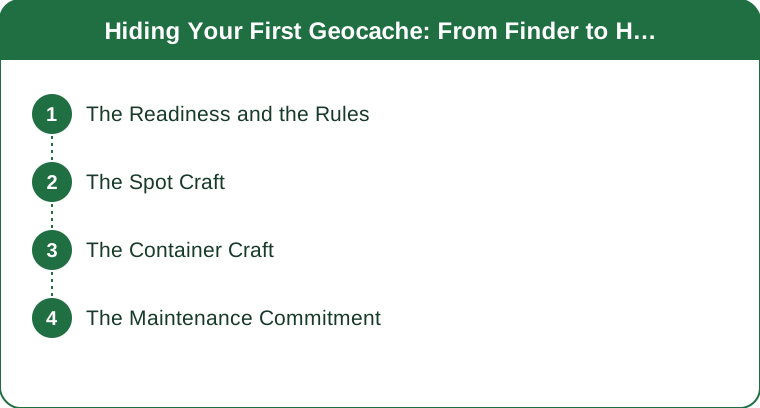
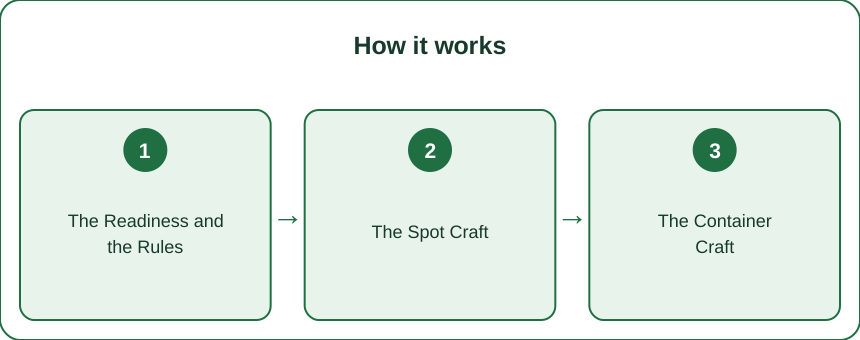
The Readiness and the Rules
Before hiding: the experience prerequisite (the community consensus — find 50-100 caches first; the finds teach what makes hides delightful versus tedious, and the variety educates your container choices), the placement rules (the platform guidelines are real — distance minimums from other caches, permission for the location, no digging, nothing on private land without explicit consent, and the safety-and-sensitivity screens; the review process enforces them, so read first), and the ethics layer (no placements that damage nature or send finders somewhere risky — the cache-in-trash-out culture extends to hiding; the hide should leave its spot better-loved, not worn).
The Spot Craft
What makes a hide worth finding: the location-first doctrine (the best caches bring finders somewhere WORTH the trip — the overlooked viewpoint, the pocket park, the historical oddity; the spot is the gift, the container is the receipt), the difficulty honesty (rate the find and terrain accurately — the D1.5 that’s actually brutal frustrates; the ratings are a promise), the muggle calculus (high-traffic spots need cleverer camouflage or suffer constant loss — the visibility-versus-accessibility trade every urban hide negotiates), and the delight details (the clever camouflage, the themed container, the view from ground zero — the hides that collect favorite points share a maker’s touch).

The Container Craft
Building to survive: the waterproof law (the container’s one job — the soggy logbook is the hobby’s most common disappointment; gasket-sealed containers earn their price, and the double-bagged logbook is standard), the size-and-label basics (the official-cache label that prevents alarm — the unlabeled container in a public place causes exactly the trouble you’d guess; the size rated honestly in the listing), the logbook-and-pencil kit (the pencil survives weather that pens don’t; the log sized to the container’s traffic), and the swag philosophy (starter trinkets set the trade tone — the take-one-leave-one economy begins with your seeding; family-friendly always).
The Maintenance Commitment
The promise that keeps caches alive: the ownership reality (a hidden cache is a standing commitment — the platform expects response to problem reports and periodic check-ins; the abandoned soggy cache is the game’s litter), the maintenance rhythm (the seasonal visit — log full? container sound? camouflage intact? — twenty minutes a quarter for a well-built hide), the community feedback loop (the logs on your cache are the reward stream — the ‘brought my kids, they loved it’ entries are the hider’s actual payment; the favorite points are the craft’s grades), and the graduation effect (hiders become better finders — the placement instincts sharpen your search instincts; and the hobby’s ecosystem runs on exactly this conversion — every cache you’ve found was someone’s maintained promise; the second chapter is joining that ledger). Hide something worth finding, then keep the promise.
Find fifty first, the spot is the gift, waterproof or bust, maintenance is the promise. Hiding a geocache is joining the game’s supply side — craft the delight, keep it alive.
Keep Reading
This article is for general informational and styling purposes only. Fit, sizing, and product availability may vary.