Geocaching in Peak Undergrowth: The Hardest Month of the Year
Quick Answer: Late August is peak vegetation, which means caches hidden in spring are now behind 60 to 90cm of growth that did not exist when they were placed. If you are failing on caches with good recent logs, the problem is almost always seasonal concealment rather than your GPS. The fix is to search at ground level rather than eye level, use the hint aggressively, and accept that some caches are genuinely a two-season problem.
The single most useful adjustment: read the placement date. A cache placed in March is hidden for March conditions.
Check local rules on leaving trails, and take tick precautions seriously in this season.
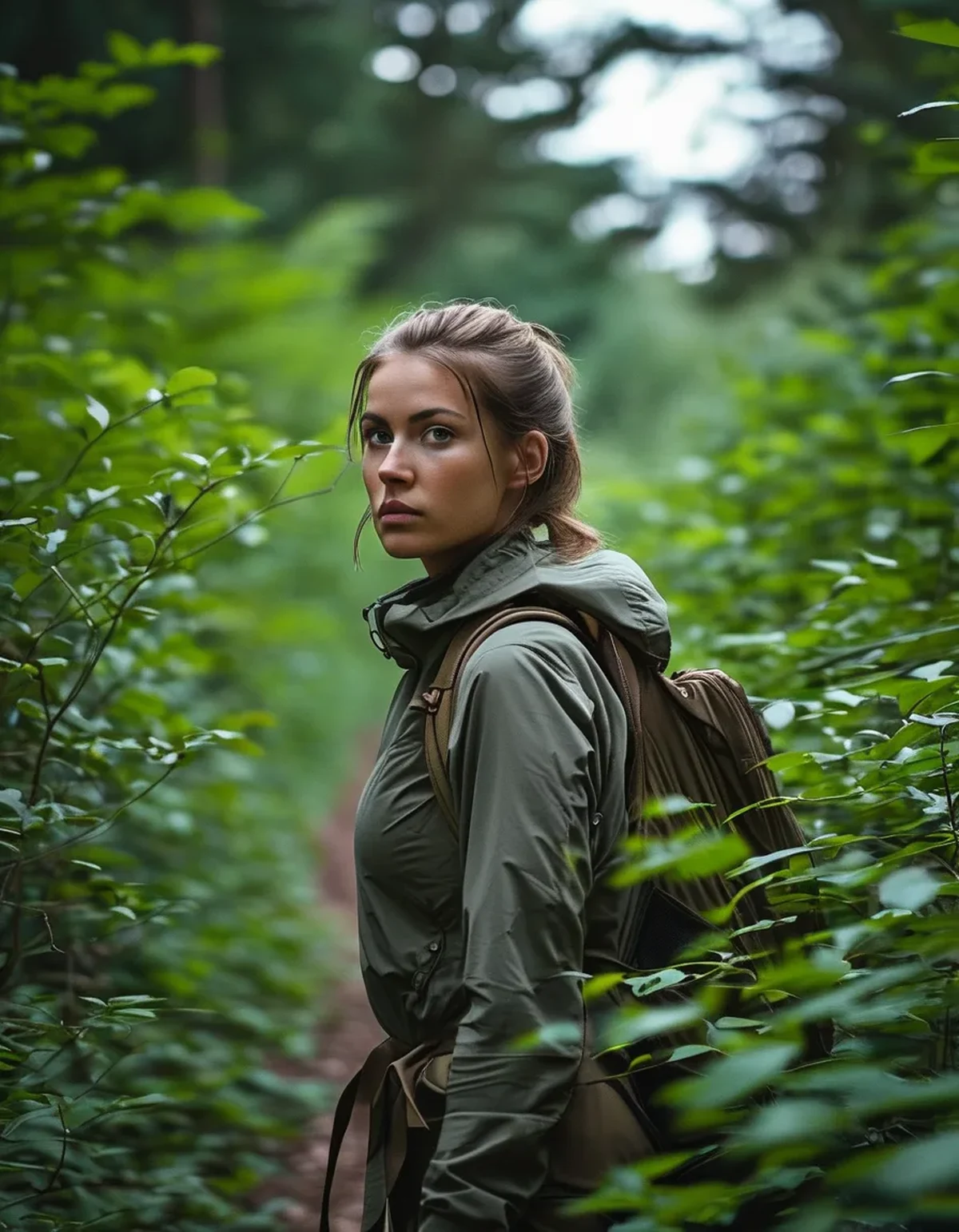
Why do caches you could find in spring disappear in late summer?
Because the cache did not move - roughly a metre of vegetation grew around it.
The scale of the change. Between April and late August, typical woodland ground cover goes from near-bare to 60 to 90cm of dense growth. Bramble, nettle, bracken, and cow parsley all peak now. A cache placed at the base of a tree in early spring was visible from three metres away when it was hidden. Today it is inside a green wall.
Why this specifically breaks searching:
- The visual sweep that normally works fails. You are scanning a uniform green surface rather than distinguishable ground features
- Landmark references in the hint stop matching. The distinctive stump the owner described is now completely covered
- You physically cannot get to the spot in many cases, or can only reach it from one direction rather than four
- GPS accuracy degrades under full canopy, and canopy is at maximum right now - typically 3 to 8 metres of error under dense summer leaf cover versus 2 to 4 in winter
The compounding factor. Because everything looks the same, you search a wider area, which increases the ground you cover and decreases the thoroughness of each square metre. Most late-summer DNFs are not searches of the wrong place; they are shallow searches of the right one.
How to read a cache page for this. Check the placement date first. A cache hidden in February or March was hidden for a bare landscape, and its difficulty rating reflects those conditions. Then check the recent logs. If the last three finds were in spring and the last three logs are DNFs, you have your answer - and it is not you.
What search technique actually works in dense growth?
Get lower, get slower, and search by touch rather than by sight.
The ground-level rule. Most caches are hidden below knee height, and in peak vegetation that entire zone is invisible from standing. Crouch or kneel and look horizontally through the stems rather than down at the canopy of the undergrowth. The view underneath dense growth is often surprisingly open, and this one change finds more late-summer caches than anything else.
The systematic sweep, since random searching fails here:
- Establish a centre point and mark it - a stick in the ground, a bag on a branch. Without a fixed reference you will drift and re-search the same area
- Work in a spiral outward, roughly 1 metre at a time
- Search each metre for a genuine 30 seconds before moving. Rushing is the actual failure mode
- Stop at 8 to 10 metres. Beyond that you are almost certainly working from bad coordinates rather than being close
Using the hint properly, which most people do badly. Decrypt it before you start searching, not after twenty minutes of frustration. There is no purity award. And read it as a description of the landscape when the cache was placed - if it says at the base of the fallen log, the fallen log may now be a green mound.
Touch searching, which feels odd and works:
- Use a stick, not your hands, in dense growth - stings, thorns, and unpleasant surprises are all more likely now
- Sweep at the base of trees and posts where containers usually sit
- Feel for regularity. Nature does not do straight edges or right angles, and a hand or stick registers a container’s geometry before your eye picks it out.
On when to stop. Two visits is a reasonable limit in this season. If a cache defeats you twice in late August, log the DNF honestly and come back in November. Winter finds on summer DNFs are extremely common, and there is no shame in the seasonal explanation.
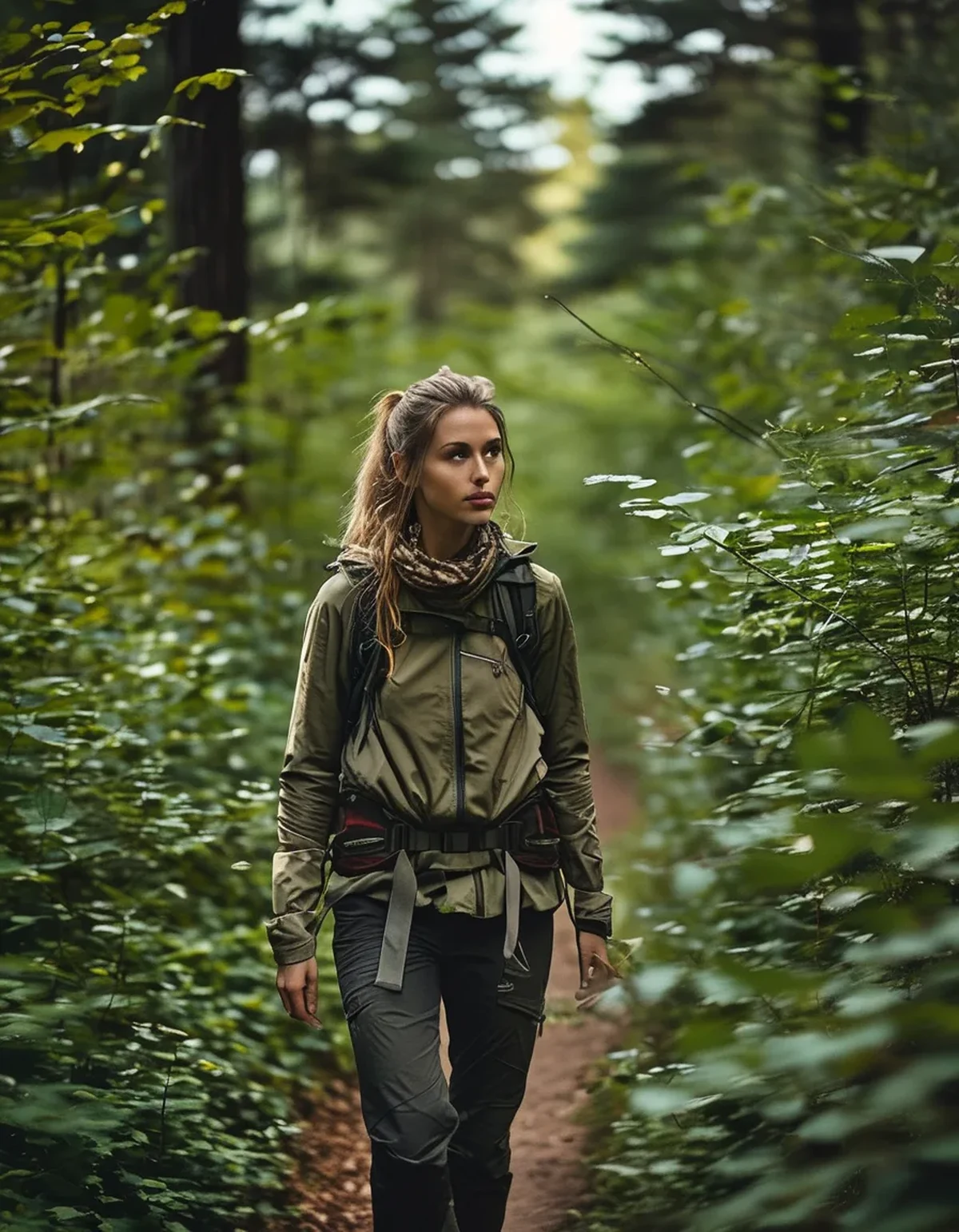
How do you handle the practical hazards of this season?
Late summer undergrowth carries risks that spring caching does not, and ticks are the main one.
Ticks, which peak in this season and matter genuinely.
- Cover legs and tuck trousers into socks. It looks daft and it works
- Permethrin-treated clothing is markedly more effective than skin repellent for ticks specifically
- Check thoroughly within a few hours of getting home - behind knees, waistband, hairline, underarms. Transmission risk rises substantially the longer a tick stays attached, so same-day removal matters
- Remove with fine tweezers close to the skin, pulling steadily upward. No twisting, no burning, no petroleum jelly
- See a doctor if you develop a spreading rash or flu-like symptoms in the following weeks. This is general information, not medical advice
Plants worth recognising:
- Giant hogweed, whose sap causes severe burns activated by sunlight. Do not touch, and wash immediately with cold water if you do
- Nettles and brambles, which are unpleasant rather than dangerous but shape where you can search
- Regional hazards - poison ivy, oak, and sumac where relevant. Learn the local ones properly rather than approximately
Heat and hydration, since late summer caching is more physical than it looks. Pushing through undergrowth is significantly harder work than walking a trail - expect to be considerably warmer than the air temperature suggests. Carry more water than a similar-distance walk would need.
Wasps and ground nests, which are at their most defensive right now. Late summer is peak wasp aggression as colonies reach maximum size. Ground nests in banks and tree roots are exactly where caches hide. If you hear sustained buzzing or see repeated traffic into one spot, stop and leave. Log it for the cache owner - it is genuinely useful information.
Visibility and time. Daylight is shortening noticeably now, roughly 2 to 3 minutes a day in temperate latitudes. A route that finished comfortably in July finishes in dusk by late August. Recalculate rather than assuming.
Myth vs Fact: Late Summer Caching
Myth: A DNF in summer means the cache is missing. Fact: In peak vegetation it usually means the cache is concealed rather than gone. Check whether the DNFs cluster in the summer months across multiple years - if the same cache gets DNFs every August and finds every January, it is seasonal, not missing. Log accordingly rather than triggering an unnecessary maintenance check.
Myth: A better GPS or phone would solve it. Fact: Under dense summer canopy, every consumer receiver degrades to roughly the same 3 to 8 metre error because the limiting factor is signal obstruction, not receiver quality. Better technique beats better hardware by a wide margin in these conditions.
Myth: Higher difficulty ratings account for the season. Fact: The rating reflects conditions at placement. A D2 placed in March can effectively be a D3.5 in August, and the rating will never change. Read the placement date as part of the rating.
Myth: You should search wider when you cannot find it. Fact: Widening the search is the classic late-summer error. Coordinates are usually fine; the search was shallow. Narrow to 5 metres and search slowly and thoroughly rather than covering 15 metres quickly.
Myth: Trampling the undergrowth is fine if you put it back. Fact: Heavy searching creates a visible geotrail that leads muggles straight to the cache and damages habitat at its most productive time of year. Search from the least destructive direction, and if the only way in is through, that is a reason to come back in winter.
FAQ: Summer Geocaching Problems, Answered
Why can I not find caches in summer that I found last winter?
Vegetation. Between winter and late August, ground cover typically grows 60 to 90cm, and caches hidden for bare-ground conditions become invisible. Nothing about your technique changed.
Is my GPS worse in summer?
Yes, meaningfully. Dense summer canopy blocks and reflects satellite signals, degrading accuracy from roughly 2 to 4 metres in winter to 3 to 8 metres under full leaf. Better hardware does not fix this - it is obstruction, not receiver quality.
How long should I search before giving up?
Search a 5 metre radius thoroughly, roughly 30 seconds per square metre, and stop at 8 to 10 metres. If two visits fail in this season, log the DNF and return in late autumn. Winter finds on summer DNFs are extremely common.
Should I log a DNF if I think the cache is just hidden?
Yes, always, and say what you observed. Write that the vegetation was dense and you may simply have missed it - that tells the owner it is not a maintenance issue and helps the next cacher calibrate.
What is the single biggest ticket risk in late summer caching?
Ticks. Tuck trousers into socks, consider permethrin-treated clothing, and do a full body check the same day. Attachment time strongly affects transmission risk, so same-day removal matters more than anything else.
When does caching get easier again?
After the first hard frosts knock the herbaceous growth down - typically late October to November in temperate zones. The window from November to March is when the difficult summer DNFs become straightforward finds.
TL;DR:
- Late August caches are hidden behind 60 to 90cm of growth that did not exist at placement - read the placement date
- Crouch and look horizontally under the undergrowth rather than down at it
- Search a 5 metre radius slowly from a fixed centre point; widening the search is the classic mistake
- Decrypt the hint before searching, and read it as a description of the spring landscape
- Take ticks seriously: tuck in, treat clothing, and check the same day
If you are DNFing more than usual right now, you are not getting worse at this. You are caching in the hardest month of the year, and November will make you look like a genius.
Keep Reading
This article is for general informational and styling purposes only. Fit, sizing, and product availability may vary.