Geocaching Gets Easier the Moment the Leaves Drop
Quick Answer: Leaf drop dramatically improves sightlines and exposes hiding spots that summer vegetation concealed, making many caches noticeably easier to find. But leaf litter buries ground-level caches, GPS accuracy improves as canopy thins, daylight shrinks fast, and muggle visibility rises without leaf cover. Autumn is the best caching season of the year if you adjust for those four.
That cache you failed twice in July — go back in November. There is a good chance you will walk straight to it.
The cache did not move. The forest got out of the way.
Why do caches get so much easier to find?
Three reasons, and the first one is enormous.
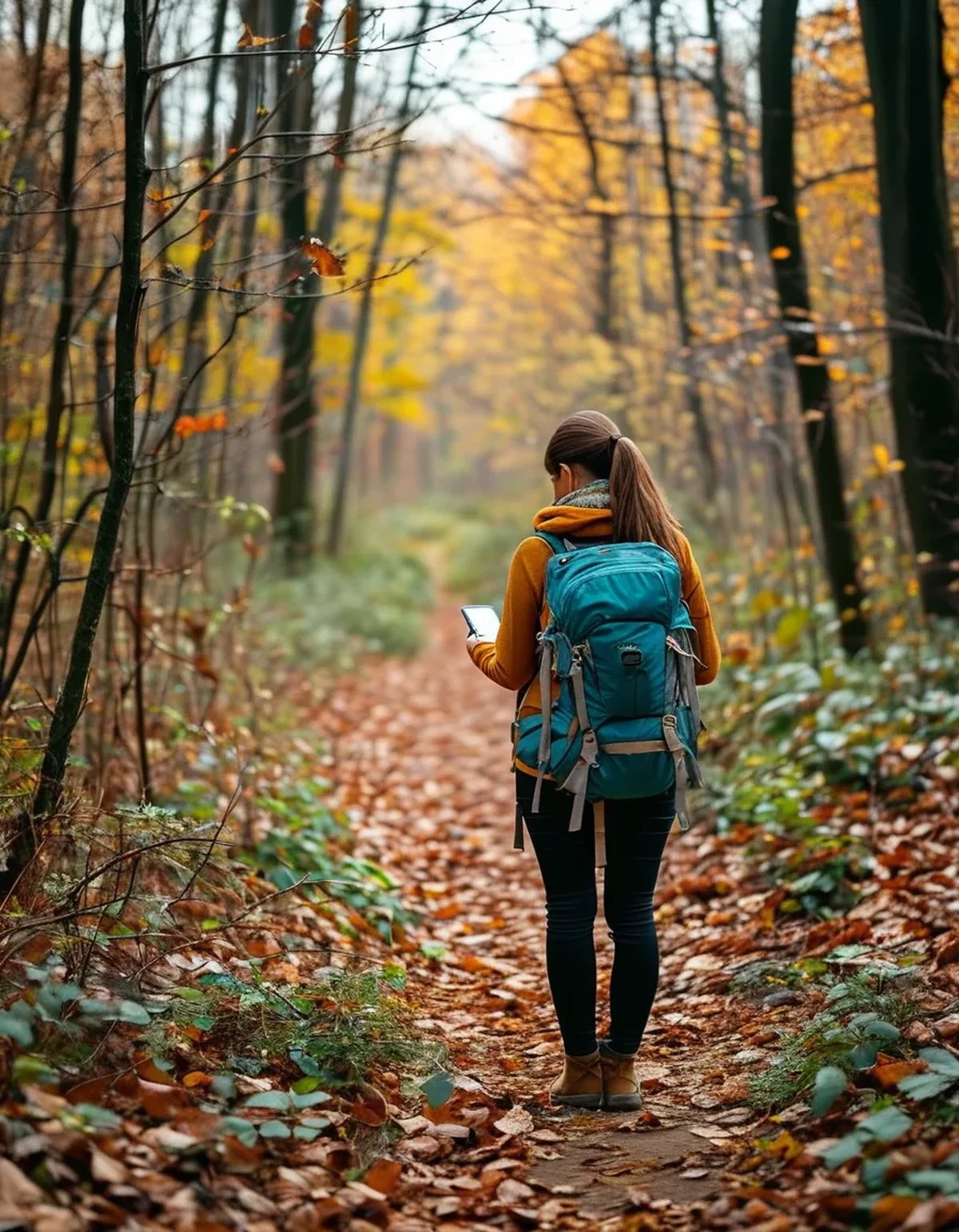
1. Sightlines open up completely. Summer undergrowth — brambles, ferns, low shrubs, dense understory — hides an extraordinary number of hiding spots at exactly the height most caches sit. Once that dies back, you can see the base of every tree and the shape of every rock pile from twenty feet away.
This is the single biggest seasonal effect in the hobby and it is why experienced cachers keep a list of summer failures to retry in late autumn.
2. GPS accuracy improves as the canopy thins. Tree canopy is one of the main causes of GPS error in wooded areas — leaves and branches attenuate and reflect satellite signals, producing the drift that puts you fifteen feet off. A bare canopy attenuates far less, and accuracy in deciduous woodland genuinely improves after leaf drop.
This will not help in dense evergreen forest, which stays just as difficult year-round.
3. The hider’s summer camouflage stops working. A cache tucked into a green shrub in June is invisible. The same cache in November is sitting in a bare bush, often visibly out of place. Camouflage chosen for one season frequently fails in another, and hiders do not always account for it.
The practical strategy: build a list of your did-not-find records and revisit them between late October and early December. For deciduous woodland caches, the success rate on retries in that window is high enough to be worth planning around.
What gets harder — the four autumn problems
1. Leaf litter buries ground-level caches. This is the direct trade-off. A cache sitting at ground level under a few inches of fresh leaf fall is genuinely invisible, and no amount of visibility improvement compensates.
What to do: when the GPS settles and nothing is visible, sweep the leaf litter with a foot or a stick in a widening spiral from the coordinates. Then put it back — burying it again for the next person is part of the etiquette. Caches in tree hollows, stumps, and above ground level get easier in autumn; ground-level ones get harder.
2. Daylight disappears fast. Sunset moves earlier by roughly a minute a day, and woodland goes dark well before open ground does — often 30 to 45 minutes earlier. An afternoon that felt generous in September becomes a headlamp situation in November.
What to do: check actual sunset time rather than estimating, plan to be out of the woods 45 minutes before it, and carry a headlamp regardless. A headlamp weighs nothing and being caught without one is the most common autumn caching problem.
3. Muggle visibility rises. Without leaf cover, you are as visible as the cache is. Retrieving an urban or park cache discreetly is considerably harder in November than in July, and the standard techniques — approaching casually, using a phone as cover, waiting for a gap — matter more.
4. Wet leaves are slippery and they hide the ground. Wet leaves on rock, on roots, or on a slope offer very little traction, and a layer of leaves conceals holes, roots, and uneven ground completely. Most autumn caching injuries are ankle rolls from stepping on something invisible under leaf cover. Boots with ankle support are worth it in a way they are not in summer.

What Nobody Tells You About Autumn Caching
Hunting season is a genuine consideration in many areas. Public land, state forests, and wildlife management areas often have active hunting seasons in autumn, and the dates vary enormously by state and by species. Check your state wildlife agency’s season dates for the areas you cache in, wear blaze orange in the woods during firearm seasons, and consider sticking to parks with no hunting during peak weeks. This is the most important safety point in autumn caching and it is rarely mentioned.
Ticks are still active. The idea that ticks stop with the first cool weather is wrong — adult ticks are active in autumn and in many regions this is a second peak period. Check thoroughly after every outing.
Cold hands ruin logbook signing. A tiny logbook and a small pencil require fine motor control that disappears below about 50°F. Bring your own pen, keep it warm, and consider gloves you can remove quickly. Many autumn DNFs are actually successful finds that got logged badly.
Cache containers get harder to open. Cold shrinks plastic and stiffens rubber gaskets, and screw-top containers that opened easily in summer can be genuinely difficult in November. Warm hands and patience beat force — cracking a container in the cold is how a cache gets archived.
Batteries drain much faster in the cold. Both dedicated GPS units and phones lose capacity at low temperatures, and phone batteries can shut down abruptly rather than warning you. Keep the phone in an inside pocket against your body rather than an outer one, and carry a backup power source.
Trail visibility changes in both directions. Leaf fall obscures the trail surface and makes footpaths harder to follow — but it also opens sightlines so you can navigate by landmarks that were invisible in summer.
Autumn is the best season for finding what other people lost. Leaf drop reveals a striking amount of dropped gear, and it also reveals caches that have been displaced from their spots — reporting a cache that has clearly moved or is damaged is one of the more useful things you can do for the community.
A practical autumn caching kit
Beyond the usual GPS or phone, pen, and trade items:
Headlamp, always. Not a phone flashlight — the phone is your navigation and draining it for light is how a routine outing becomes a problem.
A stick or trekking pole. Doubles as a leaf-litter probe and as balance on slippery ground. This is the single most useful autumn-specific addition to the kit.
Blaze orange — a hat or vest — during hunting seasons on public land.
Waterproof boots with ankle support. Wet leaves, wet ground, hidden roots.
Gloves you can work in. Thin liner gloves under warmer gloves means you can remove the outer layer to sign a log without losing all hand function.
Your own pen, kept warm. Cache pencils are frequently broken or missing, and cold ink is unreliable.
A spare battery or power bank, kept warm in an inside pocket.
A small trash bag. Cache-in-trash-out matters more in autumn, when leaf drop exposes a season’s worth of litter that was hidden.
What to leave behind: heavy layers you will carry rather than wear. Caching involves a lot of stopping and starting, so a system you can open and close easily beats a single heavy jacket.
FAQ: Autumn Geocaching Questions, Answered
When is the best window for retrying summer failures?
Roughly two weeks after peak leaf drop in your area through to the first significant snow. Visibility is at its maximum and leaf litter has usually settled and compacted somewhat.
Does GPS accuracy really improve that much?
In deciduous woodland, yes — canopy is a major source of GPS error and losing the leaves reduces it noticeably. In evergreen forest there is essentially no seasonal change.
Should I move a cache that leaf fall has completely buried?
No. Uncover it, sign, and replace it exactly as you found it, then note the leaf conditions in your log so the next cacher knows. Repositioning someone else’s cache is for the owner to decide.
Is it worth caching after the first snow?
Yes, and fresh snow has the useful property of showing whether anyone has been to the spot recently. Deep snow, on the other hand, makes ground-level caches essentially unfindable.
TL;DR: Autumn is the best caching season of the year, with four adjustments.
- Leaf drop opens sightlines and exposes hiding spots that summer undergrowth concealed. Retry your summer failures between late October and early December.
- GPS accuracy genuinely improves in deciduous woodland once the canopy thins. No change in evergreen forest.
- Ground-level caches get harder under leaf litter. Sweep in a widening spiral, then put the leaves back.
- Woodland darkens 30–45 minutes before open ground. Carry a headlamp every time.
- Check hunting seasons for any public land you cache on, and wear blaze orange during firearm seasons.
- Cold hands, cold batteries, stiff containers — bring your own pen, keep the phone against your body, and never force a container.
Pull up your DNF list this week and pick the three in deciduous woodland. That is your best afternoon of the year.
Keep Reading
This article is for general informational and styling purposes only. Fit, sizing, and product availability may vary.